Innovate Raleigh Summit 2018 Recap (Part 3/3)

B8ZIA0QP3NUJ0BFGP227-1240w.jpg

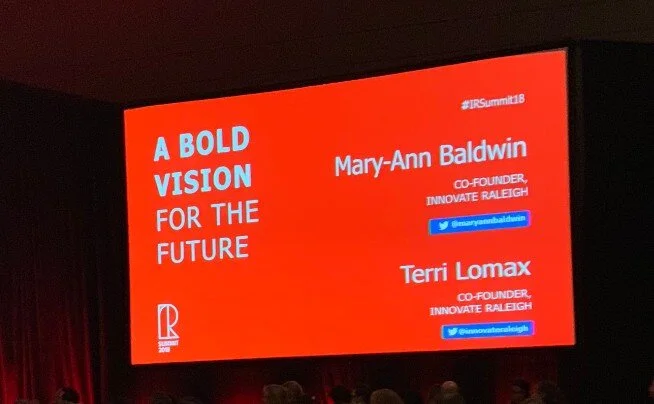
This is part 3 of our recap of Innovate Raleigh Summit 2018. The Summit brings together a lot of creative and innovative minds to discuss the future of the Triangle with regard to entrepreneurship and inclusion.

We attended a few sessions and wanted to share a few things that we learned:

Growing a City

We had the chance to listen to two great presentations about city growth in Raleigh: one by Kate Pearce at Dorothea Dix Park for the City of Raleigh, and other by Leah Burton, Director at NC State University Centennial Campus Partnership Office & Industry Alliances.

Power of Place and Dorothea Dix Park

It was exciting to hear Kate Pearce from the City of Raleigh communicate the vision of Dix Park as the next great park on the national stage.

The central theme of Kate’s presentation was the power of a place like Dix Park to attract people, including entrepreneurs, to a city like Raleigh. The presentation was full of ideas for the development of Dix Park, and their capacity to create connections and attract people to Raleigh.

One of the most interesting things to me about Kate’s presentation was the processes that go into planning Dix Park, and how much a park like Dix can impact a city.

When you’re building a company like ours, you frequently think about the processes that make up a big picture. So, it was enlightening to learn about the things that went into building Dix Park thus far, such as securing the space as a park, and pursuing city council adoption for the park.

We also spend a lot of time at Rustbrook thinking about how to measure the success of a venture. So, hearing mention of the measurement of foot traffic and social media impressions with regard to a new park installation was an unexpected gem during Kate’s presentation.

You can learn more about the plans for Dix Park at dixpark.org/ideas.

Power of Place and Centennial Campus as an Innovation District

The second presentation that we saw during this session, by Leah Burton at the NC State University Centennial Campus Partnership Office, focused on the power of a place like Centennial Campus to impact the economic growth of Raleigh.

Leah introduced us to the concept of an Innovation District, and the role of an innovation district in catalyzing economic growth in a city. She showed us how Centennial Campus at NC State University can function as an innovation district, and what that means for Raleigh.

I think that the most striking fact presented during Leah’s presentation was that NC State University adds about $6.5 billion of income to North Carolina’s economy, and well over $1 billion of that comes from startups originating from the University. That fact hit home for me as an alum who has always been impressed by NC State’s commitment to innovation.

Summary

Innovate Raleigh Summit 2018 was informative and exciting. We’re already thinking of ways to use what we learned to benefit our company, our clients, our partners and our city. Learn more about Innovate Raleigh and the Summit at innovateraleigh.com.

In case you missed it, check out the first two parts of our Innovate Raleigh Summit 2018 Recap:

Innovate Raleigh Summit 2018 Recap (Part 2/3)

893F6OTA5KYXT81S8I7D-1240w.jpg

This is part 2 of our recap of Innovate Raleigh Summit 2018. The Summit brings together a lot of creative and innovative minds to discuss the future of the Triangle with regard to entrepreneurship and inclusion.

We attended a few sessions and wanted to share a few things that we learned:

The Future of Funding in Raleigh & Beyond

I had the pleasure of sitting in on the session “The Future of Finance” with the panel led by Jon Hayes, Founder, and CEO, RewardStock. Jon is a Raleigh native who will actually be appearing on ABC’s Shark Tank this Sunday, November 18th! His startup is an automated travel service that will use reward points to help you plan your next vacation at a fraction of the cost.  David Gardner, Founder and Managing Partner of Cofounders Capital, Aalok Kanani, Director at Capital Coalition, and Representative Cynthia Ball, of the North Carolina General Assembly sat on the panel and shared their diverse and insightful views on the future on funding in Raleigh and North Carolina as well around the country.

I was somewhat shocked to find that while Raleigh provides an environment that fosters a community for start-ups (like the awesome conference) the legislation in place in NC does not, at least as far funding goes. Representative Ball was very candid when asked about it. According to the panel, our area is losing our best and brightest to other locations in the country that provide better funding options for start-ups. For example, many are heading down to Atlanta, GA to participate in programs such as Engage. I learned it’s up to us to speak to legislation about change and in the meantime find solutions that keep funding coming into Raleigh.

Funding Struggles for Start-Ups

The world of funding for start-ups is fairly new to me, and the panel was a great introduction. One of the biggest problems for start-ups is getting the initial term sheet written. A term sheet is a non-binding agreement setting forth the basic terms and conditions under which an investment will be made. It serves as the template to develop further, more detailed legal documents. A bad term sheet could be detrimental for both the start-up and the investor.  Seed funds are also difficult for start-ups to procure. To acquire seed funding it sometimes requires a start-up to have a prototype of their product or software or already have some user engagement. Without initial funding that could be difficult to do. The phrase “you need money, to make money” comes to mind here. Start-ups need capital and beta customers to succeed, and sometimes the capital needs to come first.

Alternatives to VC Funding

Aalok suggests CRAG Funding, as an alternative to VC funds. Community Recreation Assistance Grant, or CRAG Funding, is to help offset the core costs of delivering recreation in communities. Opportunity Zones were another suggestion by Aalok. An Opportunity Zone is an economically-distressed community where new investments, under certain conditions, may be eligible for preferential tax treatment. Both of these types of funding serves to help minorities and women and other start-ups who can’t get funding through VC.

If you’re looking for investors who are going to be more patient while you grow, David suggests that start-ups pursue mainstream investing, like crowdfunding. It is the best way to draw patient investors and help invest in your community at the same time. Crowdfunding allows you to raise small amounts of money from a large number of people. One of the main benefits of crowdfunding versus VC is that crowdfunding opens up neglected markets to individual investors. VC tend to go after high tech companies, leaving the customer sector unable to generate funds.

What’s Next?

I left the session focused mainly on what was lacking here in NC, but quickly shifted my thinking to what can be done about what is lacking.  There are so many opportunities for the large business owners and companies to invest back into the community by helping start-ups and keeping our people at home. By banding together to challenge legislation or even starting VC groups here in NC, it can help start-ups and the community as a whole continue to grow.

More on Innovate Raleigh

In case you missed it, be sure to check out part 1 of this series here. Otherwise, see what our Founder/CEO, Brian, learned about growing a city in part 3 of our recap:

Read Part 3 of our Innovate Raleigh Summit Recap

Innovate Raleigh Summit 2018 Recap (Part 1/3)

The Rustbrook team had the pleasure of attending Innovate Raleigh Summit 2018. The Summit brings together a lot of creative and innovative minds to discuss the future of the Triangle with regard to entrepreneurship and inclusion.

We attended a few sessions and wanted to share a few things that we learned:

Morning Keynote with Arlan Hamilton

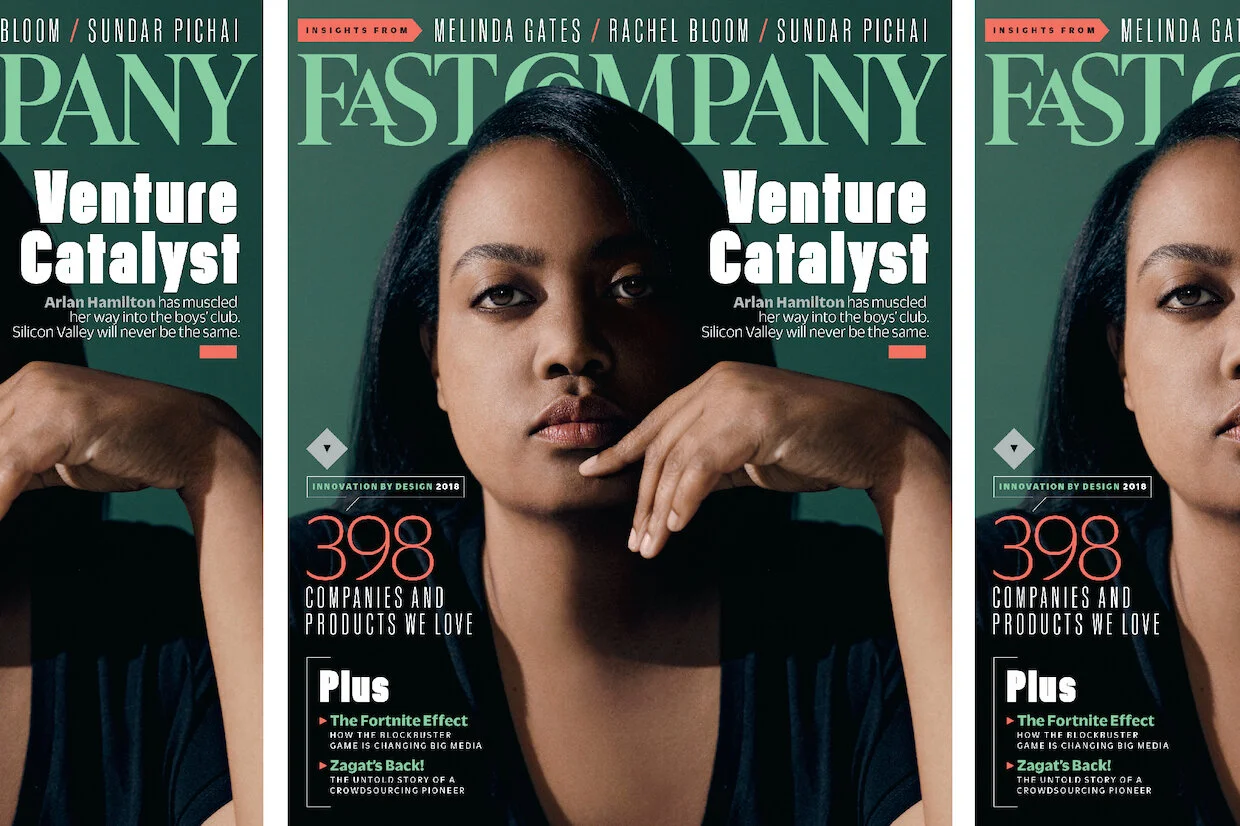
The main event of the morning was the keynote with Arlan Hamilton of Backstage Capital. It was more of an interview than a speech, and it was great. Arlan recounted her life experiences that led her to where she is today.

Image Courtesy of Fast Company

Image Courtesy of Fast Company

On Fame

When asked how things are different for her post-Fast Company cover, Arlan joked (but seriously, though) about how people magically call her back now, where before she had issues getting in contact with people.

I took this as a subtle reminder to treat people well, if for no other reason than you never know how your paths will cross in the future.

On Diversity

I loved some of Arlan’s takes on diversity. One part that stuck out to me was the way she acknowledged the business value of diversity, in that hiring for different backgrounds and perspectives is a competitive edge to your business.

Another of her takes that stuck with me: one of Arlan’s quotes from the morning keynote that I remember was: “Diversity isn’t about getting your way, it’s about getting your say.” I love how this reminds the listener that having diverse backgrounds and perspectives in your company isn’t a threat to business, and at the same time reminds you to heed those perspectives.

More on Innovate Raleigh

See what our Director or Marketing, Ashley, learned about funding in part 2 of our recap:

Read Part 2 of our Innovate Raleigh Summit Recap